Celebrating Strata Florida. July 15th and 16th 2017
http://www.strataflorida.org.uk/en/Celebrating.php

http://www.strataflorida.org.uk/en/Celebrating.php
 |
 |
Sunday 23rd July – Wednesday 2nd August 2017Church Preen, near Much Wenlock, Shropshire SY67HLParticipants: 9-17 yrs. Games, orienteering, arts and crafts, talks and discussions about our Faith, campfires, dancing, performances, and most importantly the chance to meet other Orthodox Youth!
We are aware that a small number of schools do not finish summer term until July 25th. If this is the case for your child/children, please let us know.
As always, there will be travel options available for children unable to be brought to and/or away from camp by parents.
Leaders: 18yr + Training days and social events take place earlier in the year to which all are welcome! Contact:info@goygbcamp.org.uk This e-mail address is being protected from spam bots, you need JavaScript enabled to view it
Website: www.goygbcamp.org.uk |
Meat and Greek
Inspired by the kouzína from the villages of Cyprus, we serve delicious souvlaki fresh from the skewer.
What’s souvlaki? Think toasted pitta breads packed with succulent charcoaled chicken or pork, fresh salad, homemade tzatziki, houmous and grilled halloumi cheese, then garnished with chopped onion and parsley – delicious! And if meat’s not your thing, no problem! Swap it for extra halloumi and get stuck in.
Greeks don’t do anything by halves, especially food, and we’re proud of the fact that our portions are generous and our ingredients are wholesome. Our mouth-watering souvlaki is made with produce sourced from local suppliers, so you’re getting the best of the Med and the mountains of Wales, an awesome combination, we’re sure you’ll agree.
The Orthodox Church of the Holy Fathers of Nicea (Shrewsbury) is a medieval church of the Early English style, with Tudor and modern additions and alterations. It was originally the parish church of the village of Sutton, which is mentioned in the Doomsday Book. The manor belonged to the Wenlock Abbey as far back as the ninth century so it is highly probable that some church existed from that time and possible that it was on the site of the present church. The church fell into disuse in the 19th century and was virtually unused in the 20th until it was bought by the Orthodox community in 1994. It has been extensively restored since.
As you approach the church from the gate into the field what you see is the red brick west wall with the medieval door and a gothic style wooden window. This wall was built in 1702. The bell cote is modern and replaces the original, a painting of which may be seen inside the church. At the ends of the stone walls on either side you will notice evidence of the continuation of the church particularly a door jamb on the north side. The north, south and east walls are medieval and were built in at least three stages. If you look at the south wall you will see that there is a distinct line in the stonework just below the dressed stone window sills. This is a ‘setting-out’ line and below the line the stonework is entirely composed of red sandstone. Above the line however the stone is both red sandstone and buff coloured Grinshill stone. (This feature is equally observable in both the north and the east walls). This suggests that these walls were built in two distinct stages. This might imply that the wall below the setting-out line is older, perhaps much older, than the wall above the setting-out line. It is not now possible to know. What we can do is to date the higher part of the walls by the thin lancet windows to the Early English period: late 12th to early 13th century. Notice that above the windows there are courses of later dressed Grinshill stone. These date from the Tudor restoration of the building in about 1545.

From recent (2010) geophysical archaeological surveys we now know that originally the church was about three yards longer (to the west) than at present. So, enough room for a north and south door (the door jamb of the north door can still be seen) and a west wall. Perhaps this had three lancet windows to match those in the east wall. It seems likely that some time in the early 16th century this west wall collapsed and the church fell into serious disrepair. The collapse of the west wall may account for the truss that now supports the east wall. At the apex of this east wall the stonework is very thin so the restorers may have decided to support the roof with three wooden trusses: the one in the east that covers the top of the central lancet window, one in the middle and one that is encased in the brickwork in the brick west wall.

The door is medieval. Water colours of the church in the 18th century do not show this door but it probably was recovered from use elsewhere and had originally belonged to the church.
The ancient font stands in the North West corner of the church. It is made low like this so that the candidate for baptism could climb into the font. It therefore is made for a time when adults or children – rather than babies – were being regularly baptised. This would put its date around the time of King Alfred – circa 900 A.D.
Lancet windows. These are typical of the Early English style. Long, thin but with pointed rather that rounded tops. Only the window in the north east corner and those in the east wall have retained their original arches. It is suggested that the reason for these narrow windows is that they were a security feature – they were too thin for anybody to climb through.
The central truss is Tudor work and is considered to be very fine. Originally it seems to have been painted a grey green. The roof that you see is almost entirely new but notice that some of the original purlins remain – they are significantly smaller than the modern ones.
Niches. On either side of the central lancet in the east wall there are two crudely cut niches. These were for statues and are of considerable interest. They appear to have had three manifestations. Originally their bases were in line and about six inches above the window reveal sill. Later the bases were raised about 15 inches bringing them in line with bottom of the east window – and the sill at this point was blocked up as well. Later still they were bricked in entirely and cemented over. When the church was restored these developments were removed. A reasonable conjecture as to why these developments took place is as follows.
From the central lancet widows all around the eastern half of the church you will notice that the walls are painted with red and ochre designs. For most of this area the designs consist of tendrils with small stencilled flowers. These are medieval wall paintings that were discovered during the restoration of the church in 1996. On the north wall there is a figurative painting showing the assassination of Thomas à Becket the archbishop of Canterbury. He was murdered for political reasons in Canterbury cathedral in 1170 by four knights attendant on King Henry II. The Pope declared him a martyr saint soon afterwards and a considerable cult developed with pilgrimages to his shrine in Canterbury Cathedral. We do not know why this subject should have been chosen for our church. One suggestion is that there was local interest in Thomas because Shrewsbury Abbey had numerous important relics associated with him. Although our painting has lost a great deal of paint and its original lustre, it is still possible to make out the most significant features.

The wall paintings are of considerable interest and historic importance. First of all they are a complete scheme, which may in fact be unique, for in most churches there are succeeding layers of paintings as they were renewed over the years. Second the subject of the martyrdom of Thomas à Becket is unusual and nowhere has the cross been cut as it is here. This is the oldest figurative painting in Shrewsbury.[2] Originally the painting would have been very brightly coloured.
The most striking modern feature in the church is the new icon- screen. These are present in all Orthodox churches. They serve to join the things of God, behind the screen, with the people in front of the screen. They normally have central doors, only used during the services and two doors on either side for normal access. Our screen was carved and built by a member of the congregation, Aidan Hart, using materials found in the church when we bought it, particularly the oak joists supporting the floor and parts of some of the dilapidated pews. The screen is thus made of English oak, and follows the design of many Early English rood screens but the carving is in the Byzantine style, reflecting both the ancient fabric and the traditions of the Orthodox Church.
The hand painted icons are also painted by Aidan Hart. In the lower tier from left to right there are:

The Holy Table is carved in a Byzantine style from three different types of English stone. The design is based on a Holy Table in a Byzantine church in Ravenna.
You will also notice the modern gallery which runs across the church. This serves two functions: to hold the walls together and to provide space used by the choir during services and various other activities. Notice the painting underneath the gallery on the ceiling. This shows a canopy with the cross between the symbols for the four Evangelists. An eagle for St John, an angel for St Matthew, a lion for St Mark and a bull for St Luke. This was painted by a member of the congregation, Derek Simons.
Other icons. Above the bishop’s throne there is a Greek icon showing Christ in Bishop’s vestments. This subject is normally placed near the throne. On the back wall there is a large icon of St Ninian one of the earliest British saints associated with the Lake District and South West Scotland. On one of the window sills is an icon of the five British saints most closely related to the local area:
We do not know when Christianity arrived in Shropshire. Tradition tells us that St Simon the Zealot came to Britain soon after the arrival of the Roman Legions (43 AD) but his activities are related to Yorkshire. What we do know however is that the Romans established a very substantial city about five miles East of Shrewsbury at what is now called Wroxeter. It was called Viroconium Cornovii and was the fourth largest city in Britain. The words ‘Wroxeter’ and ‘Wrekin’ (the hill that dominates East Shropshire) are directly derived from Viroconium. Probably it was pronounced ‘Wrekonium’.
With the withdrawal of the legions at the beginning of the fifth century a period of considerable political instability followed. However Viroconium continued to flourish for some time. For instance St Germanus of Auxerre came to Britain to counter the teachings of the heretic Pelagius in 429 and again in 447. He certainly visited Viroconium. Indeed it seems to have been the base for his mission into what is now mid and north Wales. The last British Archbishop of London, Theonas (Teon) fled to Viroconium in 586 when London fell to the pagan Saxons. The range of hills known now as the Stiperstones is called, in Welsh, Carneddi Teon in memory of him.
There have been important excavations at Wroxeter where a bath house has been revealed. Perhaps more interestingly, it is now known that the city was extensively re-planned in the 5th century and a building has been discovered which some suggest was the house of the bishops of Viroconium. At some point the city was abandoned. Two of the very earliest churches in Britain exist close to Viroconium: St Andrew, Wroxeter and St Eata, Atcham, both dating to at least the 7th century. So as the British migrated westward, abandoning Viroconium, the English moved behind them, being converted in due course following the missionary drive of St Oswald and St Aidan and then St Chad. It was following this period that a monastery for nuns was established at Much Wenlock by St Milburga around 670. The monastery quickly attracted substantial endowments and the land which is now the parish of Sutton was part of that endowment. It is from this time that Sutton (which means ‘South Town’) begins to be mentioned in recorded history. The church itself may be significantly older however. From excavations in the 1970’s we know that Sutton was occupied from prehistoric times and right through the Romano-British period. Amongst a number of interesting finds was a Neolithic watercourse which ran to a stone lined basin a few yards South East of Sutton church. It is suggested that this may have been a pagan site, Christianised to become a baptistery. This might account for the siting of our church.
Sutton is mentioned in the Doomsday Book as belonging to St Milburga (i.e. Wenlock Priory) “In Shrewsbury Hundred … The Church itself held and holds Sutton. 1 hide[3], 8 men both free men and villagers, with 4 ploughs. The value was 12s; now 16s.”
The manor of Sutton remained in the ownership of the monastery at Much Wenlock until the Hundred Years war when it passed to Shrewsbury Abbey. It is unthinkable that any monastery would own a manor without erecting some kind of church for the enlightenment of their tenants and we may assume this to be the case in Sutton. That it was not mentioned in the Doomsday Book is not odd. Only half of the known Saxon churches are mentioned, simply because the others were not reckoned to have a taxable value. The church was probably a very simple wooden building and about all we have to show for this period is the ancient stone font.
Between 1054 and 1204 the Western half of what had been the Roman Empire split away from the Orthodox Church in the East and became Roman Catholic. This event is referred to as “The Great Schism” and it was towards the end of this period, about 1200, that the church that we now see was built. The present church building was certainly built before 1278 because it is recorded in an inquisition document of that year as St Milburga’s. In 1535 the rent from the manor was worth £11 7s 0d to Wenlock Priory. The tithes of Sutton, paid to the vicar of Much Wenlock were worth £3 per annum. At the Dissolution of the Monasteries, Sutton along with a number of other monastic properties was bought by James Leveson, a Wolverhampton wool merchant, for £2,725 – a vast amount of money. Exactly who was looking after Sutton is not clear but the Rector was also Vicar of Much Wenlock, one Thomas Butler. This man, a University graduate, kept a journal of events in the parish which survived until 1859 when it was burnt in the fire at Wynnstay but not before it had been copied. Amongst the items in the journal is the following:-
“1547 Nov 7th The bones of the blessed virgin Milburga (with four images from neighbouring villages) were burnt at the churchyard entrance.” (Perhaps one of these images was one that stood in a niche in the East wall of Sutton church).
With the Reformation came another change of Faith for the worshippers in our church – Protestantism (Anglicanism). Judging by nineteenth and twentieth century histories of the period it could be thought that the English were eager and willing to accept the Reformation, the Dissolution of the monasteries and the Protestant faith. In fact this was very far from the truth, the changes were resented and unpopular and there was widespread resistance. In fact Protestantism was imposed by force: fines, imprisonment and, for some, the executioner’s axe. Some of this may be gleaned from Thomas Butler’s journal.
[1] Brigandine. These were typically padded sleeveless jackets which had strips of plate armour riveted to the padding on the inside. They were developed on the continent and were adopted in England towards the end of the 14th century. They became very popular in the 15th century.
[2] There is another medieval painting in Shrewsbury of the Last Supper in the King’s Head pub in Mardol. It is later than ours.
[3] Hide: a land unit reckoned at 120 acres.


18.15hrs, Lampeter Orthodox Church
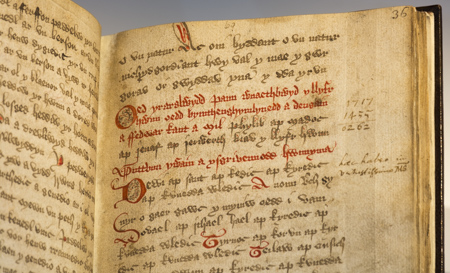 Saturday 3 June 2017, 10.30–4.00
Drwm, National Library of Wales
This day conference presents the research from a four-year project editing Welsh Lives, poetry and genealogies of saints in Wales, and launches a new research project on the Latin Lives of Welsh saints.
Speakers: J. Wyn Evans, Ann Parry Owen, Paul Russell, David Parsons.
Alaw Mai Edwards, Jenny Day, Martin Crampin
Talks in Welsh and English, simultaneous English translation available
To register please contact Angharad Elias
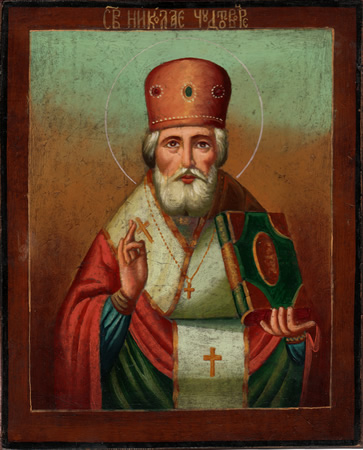
St Nicholas Orthodox Church, Cardiff.
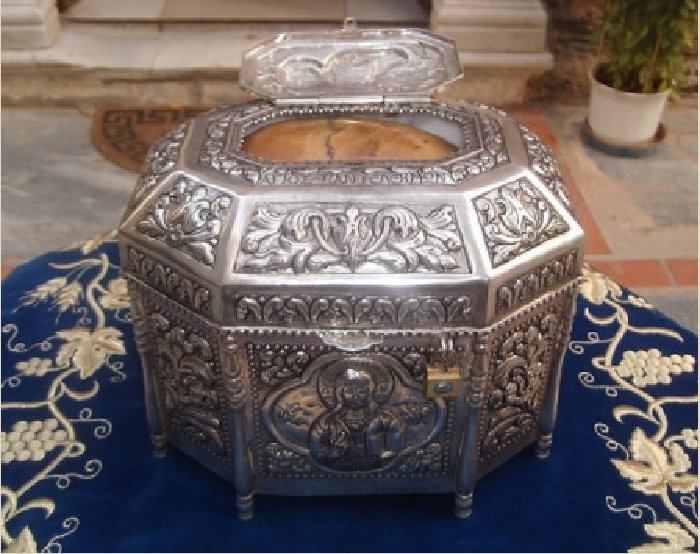
Divine Liturgy; 10am, with veneration of the Relics of St Nicholas
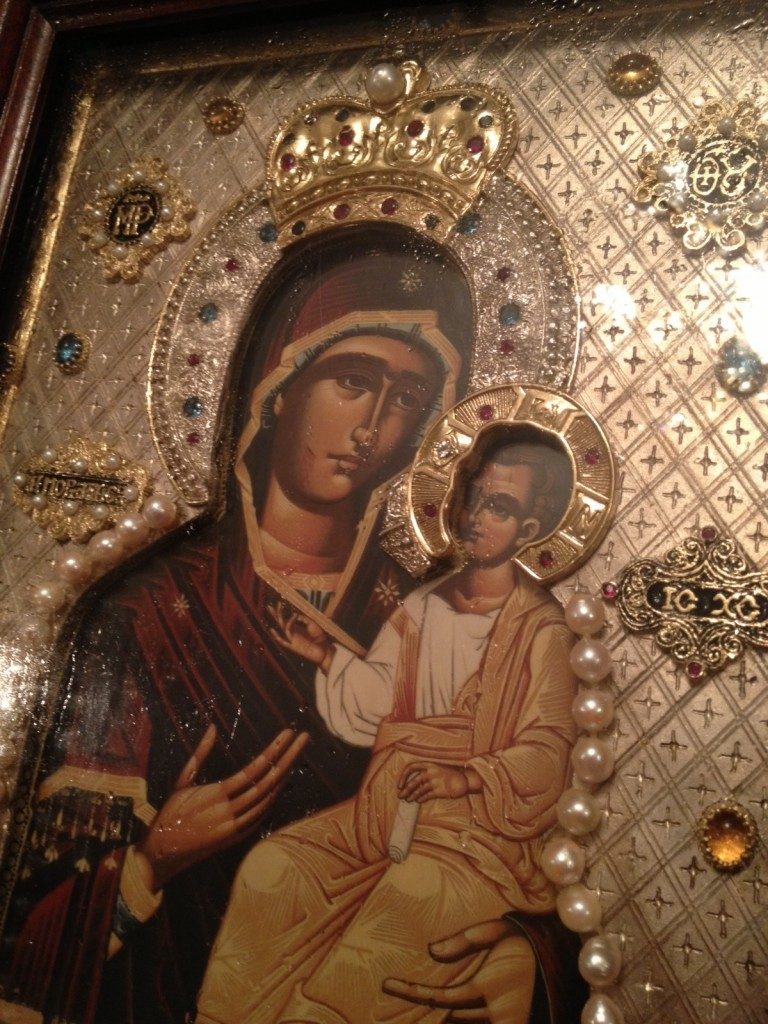
Hawaiian icon of the Iveron Mother of God
Recent Comments